

Frequently Asked Questions
We can’t wait for you to explore all of our stories and create your own learning journeys. Before you do, here are the questions we get asked the most by our visitors.
About us
What is the Digital Museum of Learning?
The Digital Museum of Learning is a free online museum for children aged 7–12 and their educators. We bring the history and science of learning to life through interactive stories that combine research on learning and development with global cultural perspectives.
Unlike traditional museums, all experiences are interactive, research-based, and designed for classroom or at-home use.
What is the Digital Museum of Learning’s vision and mission?
Our vision is an innovative digital museum that empowers children and educators to explore, apply, and share effective teaching and learning practices. Because every child deserves the opportunity to thrive through joyful, evidence-based learning.
Our mission is to bring the history and science of learning to life on-screen, helping educators and children around the world discover better ways to learn and thrive.
Who's behind the Digital Museum of Learning?
The Digital Museum of Learning is an initiative of the Jacobs Foundation, a private foundation established in 1989 by Klaus J. Jacobs and his family, committed to improving the education and development of children worldwide.
The Digital Museum of Learning is a key component of the Foundation’s Learning Outreach program, advancing its mission by translating research into engaging, accessible formats for educators and children worldwide.
To bring the history and science of learning to life on screen, we collaborate with a global network of researchers, educators, science communicators, museums, artists, designers, and developers. Together, we create interactive digital stories that blend current learning research and global cultural perspectives with visual storytelling to make learning engaging, accessible, and meaningful for children.
Scientific content is powered by BOLD, ensuring research-based accuracy, while museum and GLAM (Galleries, Libraries, Archives, and Museums) collaborations provide artifacts, artworks, and cultural context.
What are the stories about?
Our stories are organized into exhibitions that explore what helps children learn and thrive — across time, cultures, and contexts. Each story is grounded in research on how children learn and enriched with global cultural perspectives.
Topics explore the physical, mental, technological, and sociocultural dimensions of learning and education, ranging from neuroscience and metacognition to educational technology and cultural diversity.
Stories explore questions such as:
How does our brain learn?
How do emotions, culture, and technology shape learning?
How have children learned across different times and places?
Who are the stories for?
Our stories are designed for children aged 7 –12 years and educators looking to enhance their lessons. We combine science communication with visual storytelling to create experiences that are engaging, easy to understand, empowering, and fun to explore.
Teachers can integrate stories into lessons via the Teacher Zone, creating structured Learning Journeys to guide exploration, quizzes, and discussions.
Where are the users from?
The Digital Museum of Learning reaches a global community of educators and the children. By the end of 2025, more than 4,200 educators had registered to use the customizable learning journeys available in the Teacher Zone. The platform attracts visitors from over 183 countries and continues to grow its international audience. In 2025 alone, it welcomed 89,533 website users, with the largest numbers of educators that year coming from Argentina, Brazil, South Africa, Switzerland, and the United Kingdom.
How often are new stories released?
The Digital Museum of Learning was launched in June 2023. The first two exhibitions were developed in partnership with museums, exploring the cultural history of education through the lenses of nature and textiles.
Since 2025, we have partnered with BOLD, a global platform for scientific knowledge, to bring the latest research on how children learn into our stories.
Starting Winter 2025, new stories will be released regularly. Each story is part of a growing exhibition exploring the many dimensions of children’s learning.
Educators can vote on future topics via our poll on the Exhibitions page.
How can I visit the museum?
You can explore the Digital Museum of Learning online through our website by exploring the “Exhibitions” tab. All content is free to access.
Our physical home is the Johann Jacobs Museum in Zurich, which is open for special events.
Exploring the site
What is a story?
A story is a component of an exhibition that includes multimedia content such as videos, animations, text, interactive elements, and quizzes. Designed for active exploration, each story uses questions and engaging visuals to spark curiosity while sharing scientific insights and cultural perspectives that enhance children’s learning. Students can explore interactive games, puzzles, videos, sounds, artworks, and 3D objects sourced from museums and research projects around the world! Each story unfolds in three sections:
EXPLORE: Kick things off with a playful, interactive experience designed to spark curiosity and prompt questions.
EXPLAIN: Dive deeper into the topic with bite-sized scientific insights and cultural perspectives that encourage the discussion of thought-provoking questions.
ENGAGE: Wrap up with quizzes, worksheets, and age-appropriate learning resources.
Where can I find learning resources?
Learning resources are available within each story under the Resources section and can also be browsed by clicking the “Resources” tab on the website. They include worksheets, videos, teaching guides, and links to online educational materials that help extend learning beyond the story.
How can I favorite stories and resources?
Teachers can create an account for or log in to the Teacher Zone to save favorites.
Stories: Navigate to a story and click the heart icon ❤️
Resources: Open a story, scroll to Resources, and click the heart icon ❤️
Favorites can be accessed anytime from the Teacher Zone by selecting the Favorites tab
What is the Teacher Zone?
The Teacher Zone is a free tool for teachers to create Learning Journeys tailored to their teaching:
Customize with ease: Add your own questions and materials to stories and select the content and quizzes that best fit your lessons.
Monitor student progress: Use the dashboard to see how your students are progressing, what questions they’re asking, and where they might need support.
Share effortlessly: Share your Learning Journeys via link or QR code, no student login required.
Whether you're teaching in-person or online, our platform supports your classroom with digital, ready-to-use educational resources. You can find out more in the Teacher Zone FAQ.
Why do I have to create an account?
Creating an account allows teachers to customize stories, save favorites, and create and monitor Learning Journeys. Accounts are free and ensure easy access to your Learning Journeys anytime, anywhere.
Is student data secure?
Yes, students can access stories without logging in. Teachers can monitor student progress using nicknames or pseudonyms provided by students, keeping participation anonymous if desired.
The platform is fully GDPR compliant and hosted on secure servers within the EU, ensuring the protection of all users’ privacy.
We anonymize all data and IP addresses and do not use the data for any other purposes than platform improvements. No student data is shared with third parties.
How do I create an account to access the Teachers' Zone?
To create an account for the Teachers' Zone, follow these steps:
Go to the Sign In / Sign Up page.
If you don’t have an account, you can either click Sign up now or sign in using your Google or Microsoft account.
If you choose Google or Microsoft, after signing in with your selected account, you’ll be asked to enter your name, surname, display name, and country, then click Create to complete your registration.
If you select Sign up now:
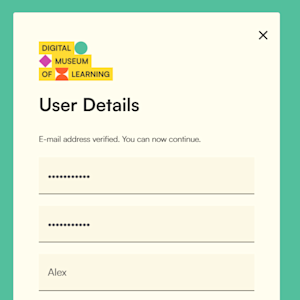
Enter your email address and click Send verification code. Please do not close the window or tab in your browser.
Check your email, enter the verification code on the website, and click Verify code.
Set a password, then enter your name, surname, display name, and country.
Click Create to finish setting up your account.
Once your account is created, you’ll have full access to the Teachers' Zone and all its educational tools and resources.
Please note: Your display name will be visible to your students. It can be changed later in the Settings of the Teacher Zone Account.
How can I create my own Learning Journey?
To create a personalized Learning Journey, start by signing up for a free Teacher Zone account. Our platform is and will always remain free to use. Once you're logged in, simply click “Create a Journey.”
From there, you can:
Select the stories you want to include
Add your own questions and content
Choose quizzes
Add additional learning resources
Show or hide content to tailor the experience to your lesson goals
The Teacher Zone is a flexible, easy-to-use tool designed to support your teaching and help you create engaging, structured learning experiences for your students. You can find out more in the Teacher Zone FAQ.
In the classrooom
How can teachers use the Digital Museum of Learning?
Teachers can:
Let students explore stories and exhibitions independently
Create tailored Learning Journeys with customized stories in the Teacher Zone
Share Learning Journeys via links, QR codes, MS Teams, or Google Classroom
The stories and Learning Journeys support various teaching models:
In-class: Guide students through the Learning Journey collectively, as a whole class or in small groups, fostering immediate discussion and feedback.
Online: Assign Learning Journeys for remote learning, allowing students to follow their interests and progress at their own pace, with follow-up questions in the classroom.
Flipped classroom: Have students explore stories at home, then use class time for deeper engagement through activities and discussions.
How much time should I plan on a story in my lessons?
We recommend allocating at least two class sessions for each story:
Session 1: Introduce and explore the story as an engaging way to spark students’ interest in a new topic.
Session 2: Facilitate discussions and activities to encourage deeper engagement with the material, enhancing understanding, and connecting it to follow-up teaching resources.
Tip: Enhance the experience by visiting a local museum or cultural heritage site, which can help students connect the story to real-world examples.
What age group is your content for?
Our content is primarily designed for children aged 7– 12, but learners of all ages are welcome to explore the stories. All stories are structured to guide learners who are new to a topic, written in simple language, with relatable examples, visuals, and everyday contexts to make complex ideas easier to understand.
To ensure the content aligns with your students' needs, please refer to the “Learning Outcomes” tab at the bottom of each story. It outlines the story’s learning objectives and helps determine whether it’s appropriate for your specific age group or learning goals.
Is the content aligned with the curricula?
Our stories are designed for a global community of educators and students and are not explicitly aligned to national curriculums. The content is designed to be globally relevant and adaptable.
Reference points include:
UNESCO’s Education 2030 Framework for Action A framework that guides the implementation of Sustainable Development Goal 4 (SDG 4) and promotes inclusive, equitable, and quality education for all, while fostering lifelong learning.
OECD Learning Compass 2030 OECD’s vision for future-ready education centers on student agency and co-agency, and the development of transformative competencies, including critical thinking, collaboration, metacognition, and responsibility.
For educators using the Swiss curriculum Lehrplan 21, aligned learning outcomes are indicated within stories.
If you're interested in a specific topic, please don't hesitate to reach out. We are always open to exploring new perspectives and co-creating meaningful learning experiences that explore how children learn.
Why should educators use the Digital Museum of Learning?
The Digital Museum of Learning is designed with educators and children in mind. Understanding the science behind how children learn allows educators to make informed decisions about various teaching and learning practices.
Teachers can use our stories and Learning Journeys to:
Spark curiosity and engagement around a new topic
Apply evidence-based approaches to learning
Encourage children to develop agency in how they learn
Integrate cultural and scientific perspectives into their lessons
Adapt stories for different ages, abilities, and teaching models
Becoming a partner
What kind of partners does the Digital Museum of Learning work with?
Our primary partner is BOLD, a global platform for scientific knowledge powered by the Jacobs Foundation. Through BOLD, we collaborate with science writers and leading researchers in the learning sciences to bring the latest scientific thinking into our stories.
In addition to our scientific partnerships, we work closely with museums, artists, and professionals from the GLAM sector (Galleries, Libraries, Archives, and Museums) to co-create visually rich, culturally diverse, and engaging learning experiences. These collaborations ensure that our stories are not only grounded in evidence but also brought to life through compelling visual storytelling and global perspectives.
We welcome collaboration across a range of fields:
Researchers: Share your scientific insights with classrooms globally by translating research into engaging, accessible learning experiences that empower children and educators to apply evidence-based teaching and learning practices.
Museums: Feature artifacts and artworks in interactive digital exhibitions that promote cultural diversity, spark curiosity, and reach classrooms globally.
Schools and educational organizations: Amplify your students’ voices by involving them in co-creating education. We welcome projects with children and school classes in which students contribute their own content. It is an excellent opportunity to bring children’s perspectives into broader educational discourse, making their voices accessible to researchers and policy makers.
Science communicators: Craft engaging, child-friendly stories that bring the science of learning to life on screen for children. If you’re passionate about translating complex research from learning sciences into playful, accessible stories, we’d love to hear from you.
Artists and designers: Co-create compelling visual stories and digital media that allows us to inspire wonder in children and make complex ideas accessible to them.
Why should I become a partner?
We collaborate with organizations that share our mission to make learning inspiring, inclusive, and evidence-based. Together, we turn knowledge into impact, one story at a time.
As a partner, you can:
Share your expertise through research, artifacts, or media that spark curiosity and deepen understanding about how children learn and thrive.
Reach classrooms globally by contributing to free, interactive educational experiences used by educators and children worldwide.
Boost your visibility and expertise in education, cultural heritage, or science communication.
Connect across sectors through our network of researchers, educators, and cultural institutions.
Co-create meaningful learning experiences that bring your research and artworks to life in innovative digital formats.
How can I become a partner?
Contact our museum team via the contact form to explore partnership opportunities.
How can I sign up as a test user?
Join our global community of test classes. Try out our new stories with your class, share your feedback, and help us improve our museum exhibitions and educational resources for children around the world.
What does it cost to become a partner?
Becoming a partner is free, requiring only time and a shared commitment to helping children learn and thrive.
contact.How can we help?
contact.Get in touch!