
Can gaming make me a better problem solver? | Digital Museum of Learning



 Explore
 Explain
What can playing games teach us?
Board games like Chess, sports such as soccer, and computer games like Rodocodo can all teach useful skills.
You learn to plan, solve problems, keep trying, and sometimes work as a team, discovering that practice helps you improve.
These skills also help you get better at thinking step by step, which leads to something called Computational Thinking.

What is computational thinking?
Have you heard of Computational Thinking (CT)? It’s a method that helps us to solve complex problems and make decisions. Computational thinking is not thinking like a computer because computers can’t think!
How does computational thinking work?
There are six main techniques in computational thinking. They are not used in a set order; it’s a flexible process.

Decomposition
Big problems are easier to solve when we break them into smaller pieces.

Abstraction
Finding and focusing on the details that help us solve the problem.

Pattern recognition
Have I solved a problem like this before? Can I do the same again? Are there repeated steps in the problem?

Evaluation
Finding out if the solution works, then taking steps to improve it.

Collaboration
Working together to find the best solution.

Algorithmic thinking
Creating a clear set of instructions.
Did I use computational thinking in Rodocodo?
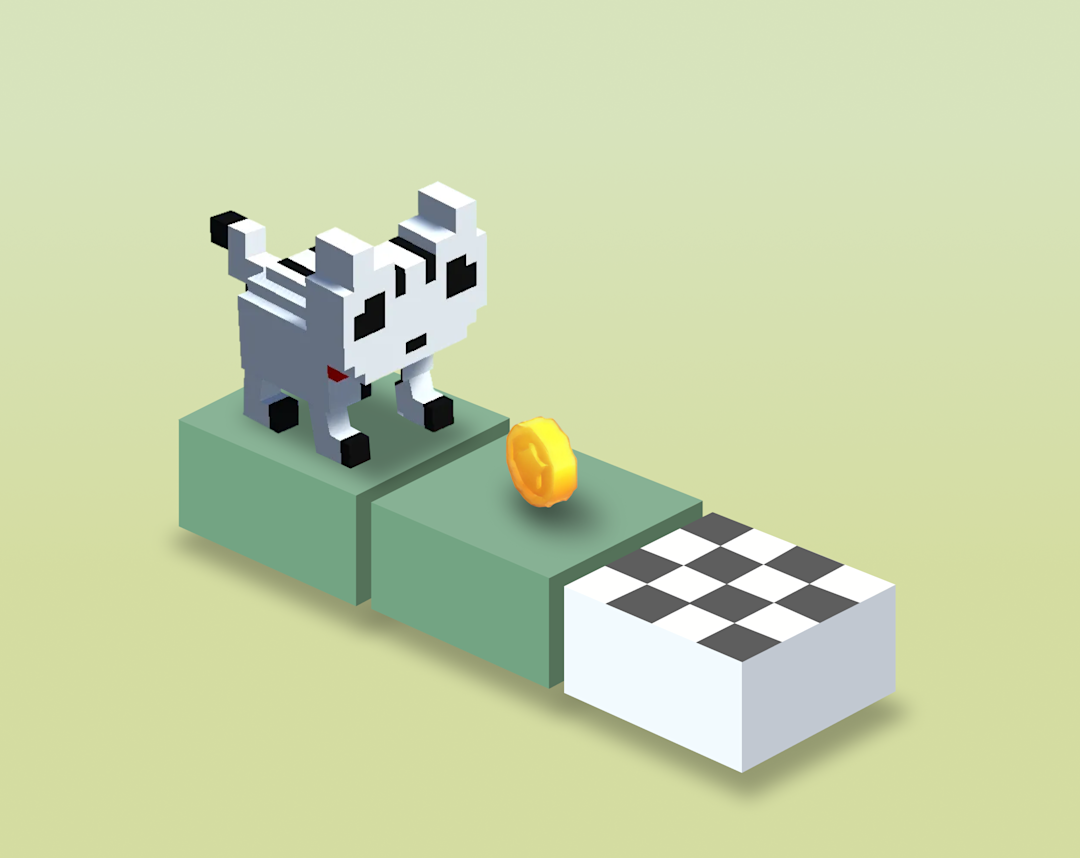
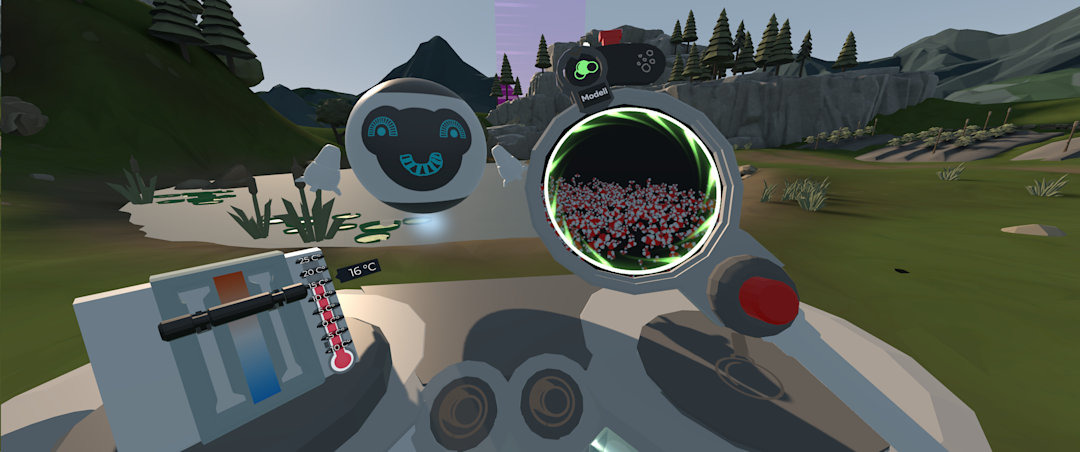
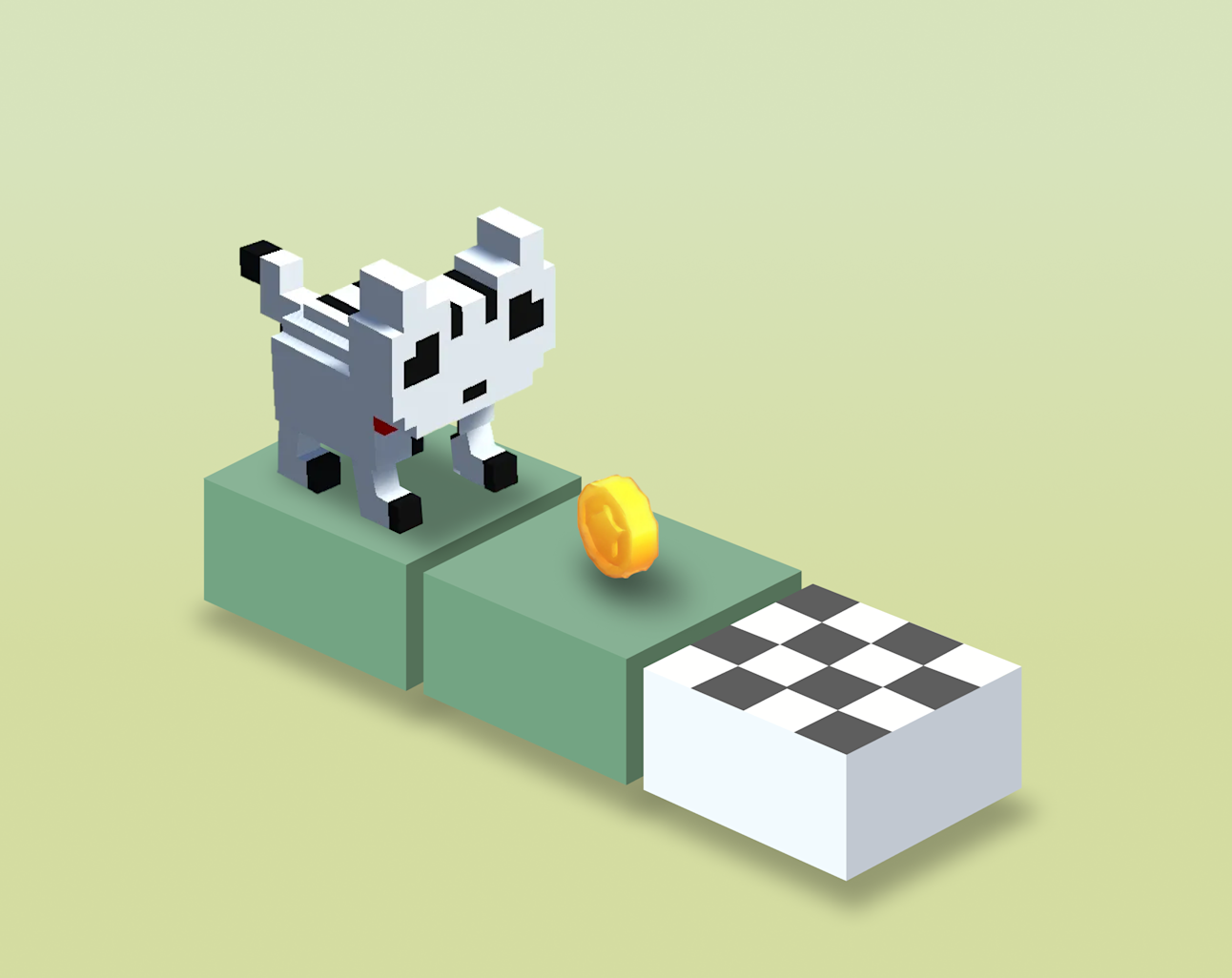
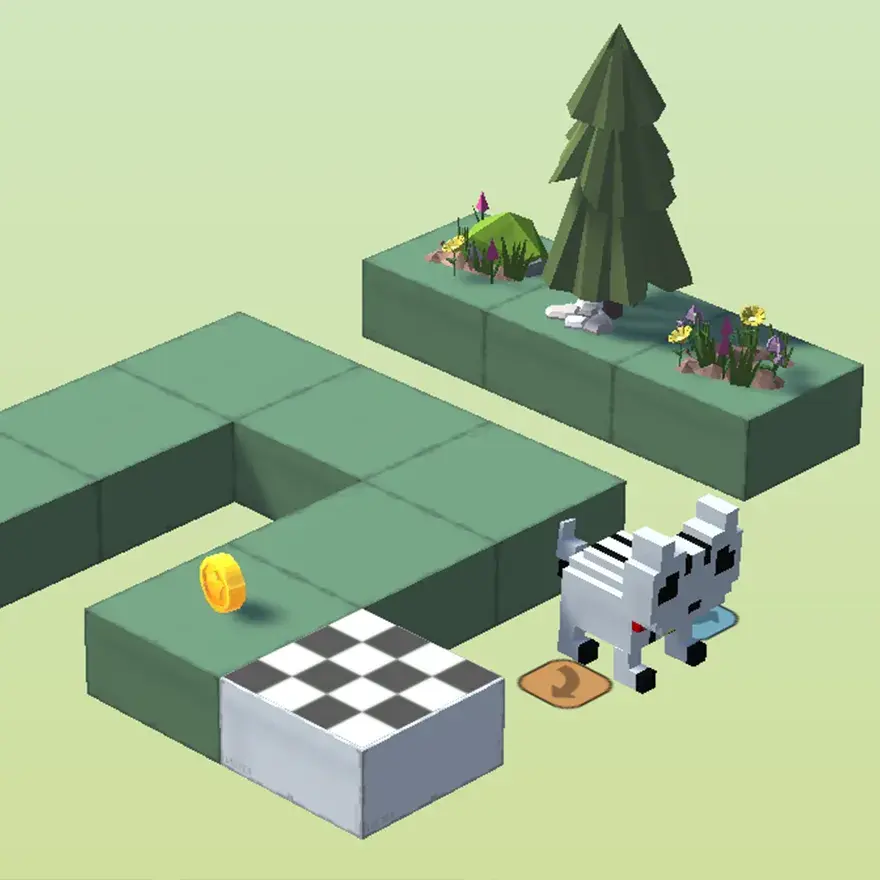
Yes! The game started with a simple problem: telling Rodocodo Cat to walk forward, pick up a coin, and walk forward again. As you moved through the levels, the route became harder, and you needed to use computational thinking (CT) techniques.


Real world CT challenge!
Use computational thinking to write clear directions for a visitor. The challenge is to go from the school lobby (A), collect a soccer ball from the black building (B), and take it to the small green court (C). Fences block certain paths and cannot be crossed.
Use the worksheet in the resource section to code your route.

Code your directions
Decomposition: Break the route into steps: 1) go out of the lobby, 2) cross the play area.
Abstraction: Keep only important information—no extra stories!
Pattern recognition: Are some instructions repeated, like how to open doors?
Algorithmic thinking: Write your directions for the visitor.
Evaluation and debugging: Check the instructions and fix them if needed.
Collaboration: Work as a team and review your partner’s work.
How does Rodocodo help me become a coding problem-solver?

Visual coding language
The command icons are easier to learn than a text-based coding language. The next step will be to learn to write the same instructions using words instead of icons. For example “moveForward()”.
Trial and error
You learn by testing the steps in your code. If Rodocodo Cat doesn’t reach the goal, that’s okay. You can change your commands and try again. Making mistakes helps you learn, because every time you try, you get better!
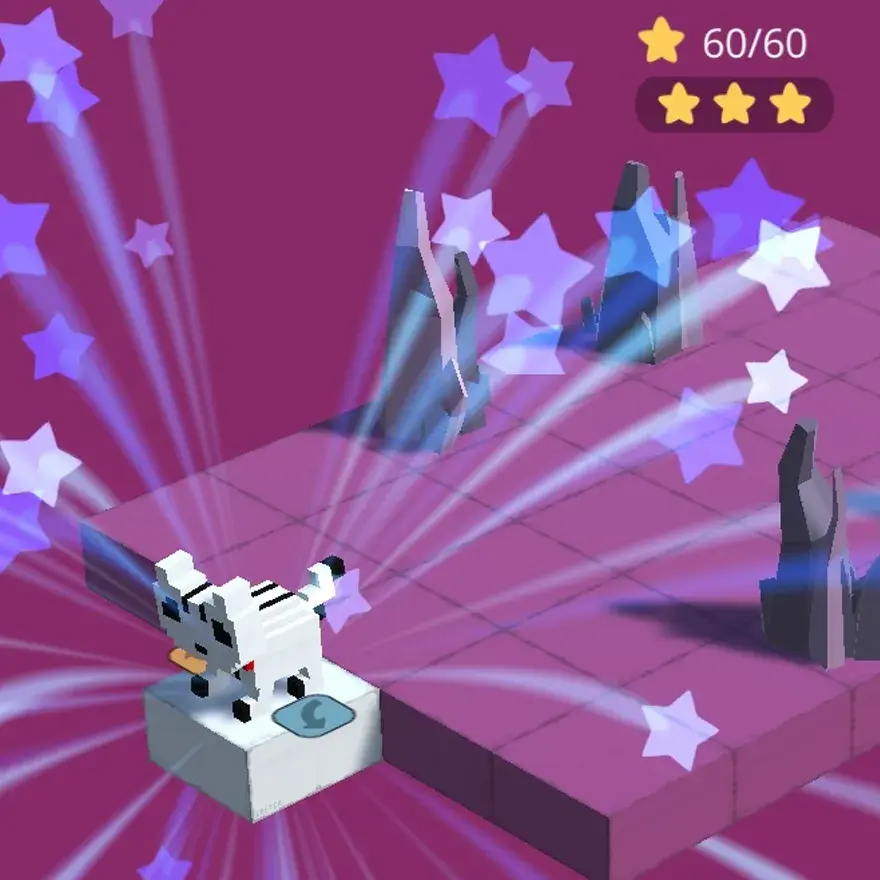
Encouragement
The game celebrates when Rodocodo Cat reaches the finish tile and rewards you with stars, no matter how many attempts it took! You learn that you can solve the problem if you keep trying. Believing you can get better with practice is called having a growth mindset.
What is a growth mindset?

Fixed Mindset
A mindset is how you look at the world. It shapes how you think, feel, and behave. If you have a fixed mindset, you might believe there is nothing you can do if you fail a task the first time.

Growth Mindset
Believing that practice helps you improve is part of a growth mindset. You need it to get better at anything, from football to playing the drums! Try telling yourself “I’m not good at this yet”—you only fail if you give up trying.
Focus on the positive
If you want to develop a growth mindset, it helps to focus on the positive, whether you’re in school or not!
Three ways to develop a growth mindset

Be kind to yourself when things don’t work—you haven’t solved the problem yet! See it as a challenge that gives you a chance to learn something new.

People learn in different ways, so if one way doesn’t work, try another. For example, some people learn their multiplication tables by saying them out loud like a poem, while others prefer to write them down.

See learning as a journey made of small steps, rather than one giant leap. Celebrate small achievements, not just the end result.
Who made Rodocodo?
Chi Dire is from Nottingham in the UK. He designed Rodocodo so his own children could have fun while learning to code.
It was important to him that they could play without help, so they could develop problem-solving skills and a growth mindset. He certainly set himself a big challenge!
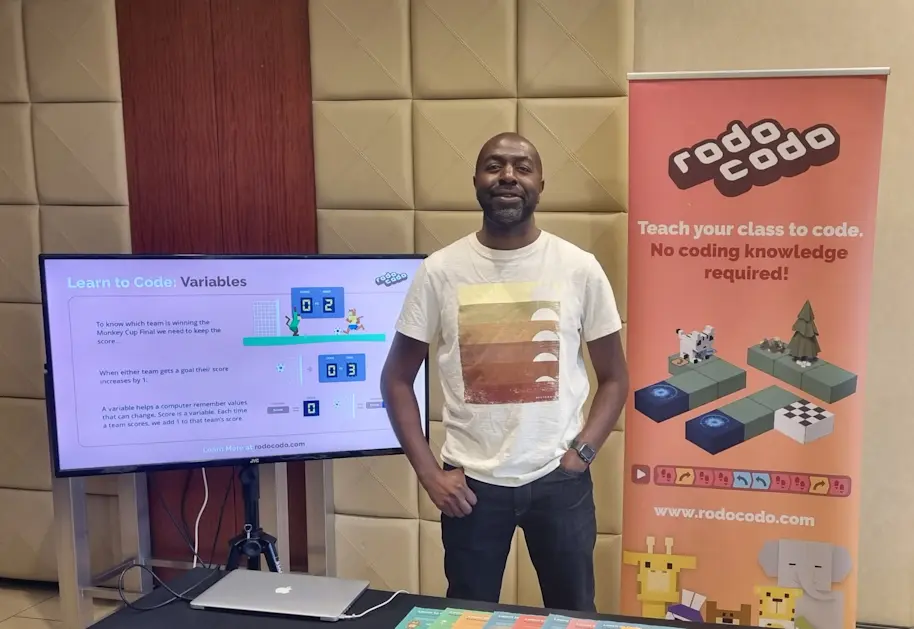
I wanted children to know that with patience, curiosity, and persistence, they could solve problems on their own.
Chi Dire, Inventor of Rodocodo
Chi’s growth mindset
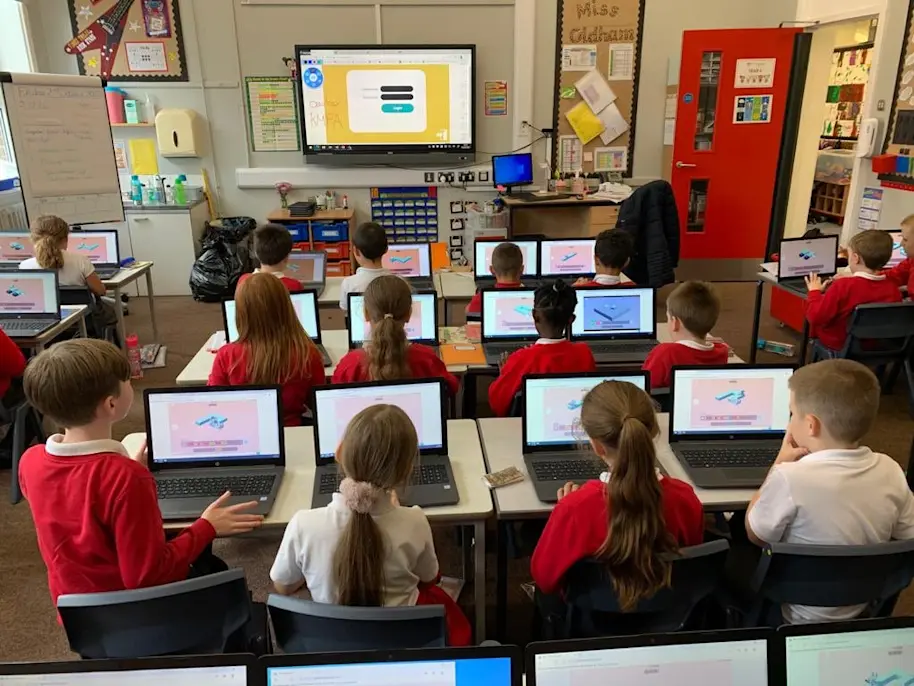
Chi shared Rodocodo with his children’s school and found that the students asked for lots of help. He collaborated with the teachers and children to find the problems and best solutions.
He used his evaluation and debugging skills to test and improve the game. He was using computational thinking and a growth mindset to make Rodocodo even better!
In partnership with


 Engage
Difficulty
Easy
Want to learn more?
Learning Objectives
Based on Curriculum 21, German-speaking Switzerland, 2025.
The students …
MI.2.2 for 9+
2b) can search for solution paths to simple problems through trial and error and check them for correctness (e.g., finding a path, developing a game strategy). They can compare different solution paths.
2c) can identify, describe, and clearly represent processes from their environment that include loops and branches.
2e) understand that a computer can only execute predefined instructions and that a program is a sequence of such instructions.
Computational Thinking
can explain computational thinking and its key components
can recognize how computational thinking skills are used in everyday life.
Social Emotional Learning
can reflect on their own problem‑solving strategies and explain how coding games can help them improve these skills.
can describe what a growth mindset is and give examples of how it helps them handle challenges.
About the author
This story has been written by Dr Sarah Bearchell Sarah is a scientist with a passion for sharing science. She writes for children and adults - including a book, video scripts, science shows, magazine articles and activity booklets. She also loves to create and share practical science activities which everyone can join in with and has won two UK awards for her work.
Bibliography
Computational Thinking
Cambridge Mathematics. (2019). Computational thinking in the classroom. Retrieved from https://www.cambridgemaths.org/Images/espresso_19_computational_thinking_in_the_classroom.pdf
Wing, J. M. (2006). Computational thinking. Communications of the ACM, 49(3), 33–35. https://doi.org/10.1145/1118178.1118215
York Online. (n.d.). What is computational thinking? Retrieved from https://online.york.ac.uk/resources/what-is-computational-thinking/
Coding Games
Giannakoulas, A., & Xinogalos, S. (2023). Studying the effects of educational games on cultivating computational thinking skills to primary school students: A systematic literature review. Education and Information Technologies. https://doi.org/10.1007/s40692-023-00300-z
Hern, A. (2021, October 4). Coding the future: The tech kids solving life’s problems. The Guardian. https://www.theguardian.com/technology/2021/oct/04/coding-the-future-the-tech-kids-solving-lifes-problems
Mesiti, L. A., Parkes, A., Paneto, S. C., & Cahill, C. (2019). Building capacity for computational thinking in youth through informal education. Journal of Museum Education, 44(1), 108–121. https://doi.org/10.1080/10598650.2018.1558656
Videnovik, M., Vold, T., Kiønig, L., Madevska Bogdanova, A., & Trajkovik, V. (2023). Game-based learning in computer science education: A scoping literature review. International Journal of STEM Education, 10(54). https://doi.org/10.1186/s40594-023-00447-2
Zhang, S., Wong, G. K. W., & Chan, P. C. F. (2023). Playing coding games to learn computational thinking: What motivates students to use this tool at home? Education and Information Technologies, 28, 193–216. https://doi.org/10.1007/s10639-022-11181-7
Games that teach computational thinking
Coding Galaxy. (n.d.). Computational Thinking Learning Platform. https://codinggalaxy.com/
Minecraft Education. (n.d.). Get Minecraft for Your Classroom. https://education.minecraft.net/en-us
ScratchEd. (n.d.). Creative Computing Curriculum Guide. https://scratched.gse.harvard.edu/guide/curriculum.html
imagiLabs. (n.d.). Teach Python with imagi Edu. https://imagilabs.com/pages/teachers
Copyright and Licenses
Images in the quiz
A young boy standing in front of a television, 2017,Pixabay, Public Domain.
Children learning robotic by Torychemistry, n.d., Adobe Stock, Copyright (Royalty-Free Standard License).
Culinary class in Baozhong Junior High School by 褒忠國中 雲端網, 2013, Wikimedia Commons, CC BY 2.0.
For your inner peace by Svitlana, n.d., Adobe Stock, Copyright (Royalty-Free Standard License).
Learning to solve problems by Bill McConkey, Wellcome Collection, United Kingdom, via Europeana, CC-BY.
Computational Thinking Decomposition by James Chans, IMGBIN, Editorial use, Color modifications.
Computational Thinking Abstraction by CamNagle, IMGBIN, Editorial Use, Color modifications.
Pattern Recognition by ICONGALAXY, Noun Project, Royalty-Free License.
Debugging by nangicon, Noun Project, Royalty-Free License.
Mindset by Srinivas Agra, Noun Project, Royalty-Free License.
Up Next